16. Generic Orthotics

Your felt sense and connection to the ground, through your shoes, plays a major role in your postural alignment, how you physically feel and move, how you orient yourself upright against gravity and with what muscles.

Your ability to sense yourself directly reflects how you process and integrate information. It even plays a role in your emotional regulation and ability to feel safe and secure in your body. 

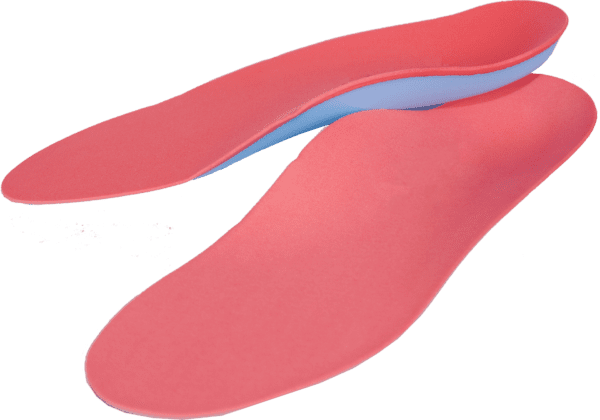
Orthotics that are found over the counter can be extremely beneficial, and can change your postural experience, giving you better support, alignment and felt sense when standing and walking. 

Consider updating and/or getting a new pair of generic or “over-the-counter” (OTC) orthotics to support yourself on all levels of your being. Below are some common OTC orthotic companies that provide a wide variety of orthotics that can fit your needs. There are many out there to choose from and what works for one may not for another. 

Refer here for how to determine if this type of foot support would be beneficial for you at this time.

Optionally, use your testing technique.

Standard Cushion 

Extra Cushion 

Other Options 

Perhaps there is some other brand you are aware of that you want to try or you want to assess your current orthotics.

The best approach is to collect all the orthotics you want to test and complete the process below. You may also go to a good shoe store where you can try on different insoles within your shoes, but doing the physical assessment tests may be more comfortable at home.

When you find the right combination, you should really sense it in your body with it feeling more comfortable or something feels better in some way. Occasionally a matching pair of orthotics does not help because your right and left foot are actually different. If you are looking for something other than another OTC orthotic, checkout Custom PRI Orthotics.


Assessment Instructions to Determine Optimal Foot Orthotics

    • Determine your baseline status:
      1. While barefoot, walk for 30-60 seconds on a level surface to get a feel for how you move without shoes or sensory foot support on. Sometimes filming your walk can help you see a difference if feeling it is hard.
      2. While still barefoot, perform at least 2 lower body Physical Resonance Tests (toe touch, squat, kneeling or single leg balance) to get a baseline. Take note of your scores.
    • Try one of the orthotic options
      1. Walk for 30-60 seconds in that condition and do the same 2 Physical Resonance Tests to see if there is a difference. Film this walk as desired to compare with your barefoot walk.
    • What the results mean:
      1. If either of your Physical Resonance Tests are worse it indicates that condition is not a good match for you.
      2. If either of your Physical Resonance Tests are better it indicates that condition positively supports your postural system.
      3. If either of your Physical Resonance Tests are not different it indicates that condition neither helps nor hurts you.
      4. If one test was better and one was worse, add a third Physical Resonance Test and assess the walking videos to see how you are moving.
    • Perform this for all conditions you wish to test.
      • When a particular sensory support and/or shoe is right for you, it should feel good. However, sometimes a new pattern can feel "different" or "weird" while still testing as beneficial for your body. Trust your physical tests. In these cases, you may need to gradually build up your tolerance to it using a wear schedule.