


06. Boundary Knowledge

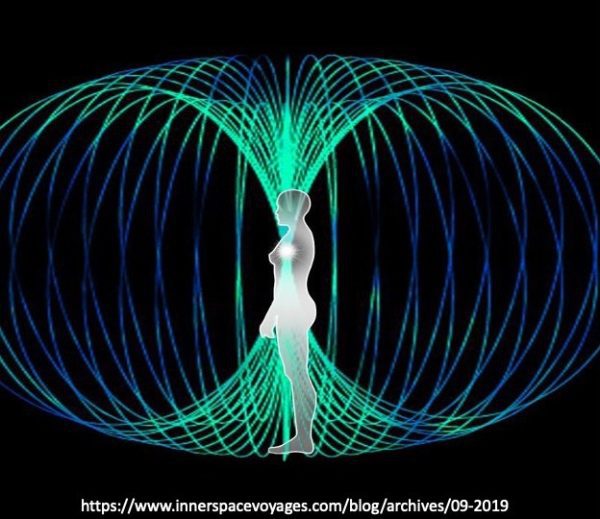
Extending about an arm’s length away from your physical body in all directions is your personal space. Surrounding this space is an energetic boundary delineating your personal container.
A healthy outer boundary ideally acts as a 2-way filter for you. It serves to block out external toxic energies while allowing nourishing and beneficial frequencies in. Likewise, it permits you to release unwanted energies as well as give out positive ones into your environment. It helps you maintain and contain your own lifeforce so that you don’t leak vital energy.
However, if your boundary has areas of weakness and is not fully intact, it most likely is not appropriately serving these filtration roles for you. Any imbalanced boundary makes it difficult for you to healthily live and function in the world. You become vulnerable to anxiety, excessive worry and fear which makes it difficult for you to know and trust yourself, others and make the best choices.
Your boundary serves to not only protect you but to maintain appropriate boundaries within all your relationships.
If your boundary has dysfunctional filtration you may display any of the following relationship tendencies:
- Not being able to say no, overdoing and/or over giving to others
- Receive more than give or give more than you receive
- Difficulty expressing emotions and not allowing yourself to open up and be vulnerable in relationships
- Overly defensive
- Clingy tendencies
- Saying yes all the time or getting lost in codependent or toxic relationships
- Attract relationships that do not positively support you or that prolong old toxic patterns. Repeat the same patterns over and over in each relationship
- Avoid relationships that do positively support you, run from a truly safe situation due to incorrectly perceived threat, vulnerability or old fears
- Overly sensitive to the environment and other people’s emotions and energy
- Oblivious to the environment and other people’s emotions and energy
- Easily drained by people or quick to take on other people‘s problems
- Being good at assessing what everyone else may need and not paying attention to your own needs
Your boundary defines “You” and your essence. You are your own unique person and soul and your boundary is how you identify as yourself from the greater whole you are connected to. If you are not secure or aware of who “You” are, you will be lost and overwhelmed within the universe.
It is essential that you know where “You” begin and end, on all planes, physical, mental, emotional and on a soul level. Your boundary corresponds to your self-esteem and sense of empowerment.
Without a strong boundary you may have the following tendencies:
- Anxiety
- Increased need to control
- Feel a lack of safety and security
- Poor ability to handle stress, decreased resilience
- Get upset easily, be overly sensitive, cannot handle criticism
- Be overly judgmental
- Over rely on external validation for sense of self
- Poor self-esteem, self-worth, self-love and self-acceptance
- Perfectionism, over-achieving, nothing is ever “good enough”
- Have difficulty making decisions
- Rash decision making
- Make poor decisions for yourself, self-sabotage
- Compromise your personal honor, integrity
- Overreact to situations, have a short fuse
- Not feel confident or empowered to take any risks, try new things
- Excessive risk taking
- Not stick up for yourself, be taken advantage of, victim mentality
- Bully or boss others around
- Not take responsibility for yourself and behaviors, immature
- Be overly cautious, serious and/or regimented in your life
- Overly express or repress your feelings, especially anger
- Have addictions or an over reliance on distractions (food, sex, TV, work, drugs, etc) to avoid experiencing negative emotions
The boundary of your personal space corresponds to the boundary of your physical body. If you tend to dissociate from your physical body, have poor body awareness, be ungrounded, clumsy, dizzy, have excessive hypermobility/flexibility or hypomobility/tightness this tends to correspond to the state of your emotional boundary and vice versa.
Since a vulnerable boundary makes you more susceptible to external influences, this may also extend to physical pathogens and toxins. On the physical level, your immune system regulates your ability to protect yourself. If any part of you does not feel secure this can extend to a weakening and over-taxing of your immune system making you vulnerable to pathogenic and toxin invasion. It could also impair your ability to detoxify. If you have infection issues (physical boundary breach by pathogens) such as chronic viruses, bacteria, mold, etc you likely have boundary weakness and imbalances.
In some cases, your physical body will not be able to heal these physical manifestations until you have restored your personal boundary. This means working in the emotional, mental and even soul realms.
Your emotions serve to help you maintain your personal boundary.
- Similar to how pain functions as a message that your physical boundary is perceived as being threatened and needs attention, your emotions let you know when your personal boundary is perceived as being threatened.
- Anger (or any of its derivatives such as irritation, frustration, hurt, disappointment, resentment, rage, hatred, envy, jealousy and even shame) is the primary emotion that signals you are perceiving your boundary is being attacked. This is an important job for your emotions! Therefore, it is key that you regard anger (or any emotion) as being your friend and not your foe. Even though it is unpleasant and difficult to experience anger and related sensations, without it you would not be able to maintain your boundary.
- Emotions and emotional energy are crucial messengers to your health and wellbeing. The problem is that our society has taught us that anger and other “negative emotions” are bad, not acceptable to feel and that we should repress them. As a result, many of us are carrying around large amounts of buried emotional energy in our bodies, hearts, mind and soul masquerading as various forms of disease and dissatisfaction with our lives and relationships.
- Anger or its derivatives will be triggered in situations where you and your boundary are being physically threatened. This is obviously important to be aware of! Thank your emotions, especially anger for doing this!
In today’s modern culture it is both the emotional boundary and the physical one that may be perceived as being threatened. Depending on how secure your boundary is will ultimately dictate how you respond.
It is important to note that anger can be triggered regardless if a threat is actually real or not.
- For example, consider a situation where someone is trying to provide you with valuable constructive criticism but due to weakness in your boundary you are triggered with anger as you are perceiving it as an attack on your sense of self. In such a situation, the most appropriate way to handle this reaction would be to notice you are triggered and the emotion you are feeling. As soon as you can find a time and space, you will then need to process it. Otherwise, in the immediate moment it is difficult to logically discern whether you are truly under threat because of the emotional response being activated and clouding your judgment.
- Once you have successfully processed your anger and used it to strengthen your boundary the next time this type of situation occurs you most likely will react with less or no anger and be more open to accepting such constructive criticism. You won't feel threatened or vulnerable with no boundary.
What is key to realize is that your anger serves to let you know you are feeling threatened. After determining that you are not actually in physical danger (although of course it's possible you may indeed be and need to react immediately) you can then attend to your emotional boundary.
This will involve channeling and transforming your anger into energy of empowerment which will serve to strengthen your boundary. Any anger that you have not appropriately processed throughout your life (and even your ancestors) will continue to be stored in your body thus chronically weakening your boundary and making you vulnerable to any kind of health condition or unhealthy relationships.
Sources of unprocessed anger can extend all the way back to when you were in the womb, your birth, infancy, early childhood and so on. Keep in mind, there is often a lot of it which can take some time to fully unpack and process so be patient with yourself. Ancestral and even collective patterns of anger may be affecting your boundary. To truly free yourself to be You, you need to connect with and intentionally work with your boundary.
Review this information at least 2-3 times over the next 3-7 days, and then as often as desired to support you in establishing and maintaining your healthy boundary. *Unless otherwise directed
- Optionally, use your testing technique to determine your optimal duration to review this information, or where specifically to focus.
Enjoy these other related Master Guide items to Resonate Health:
Disclaimer and Copyright
This content is being provided for informational purposes only and is not a substitute for medical advice. This content has the potential to produce healing and detox responses. Please consult your medical doctor or professional if you have medical concerns. If you experience any discomfort or adverse effects discontinue.
©️ 2022 Resonate Health. This content may not be duplicated, copied or shared unless authorized.
Support the Master Guide
If this Master Guide has supported you, please consider making a donation to help keep this free resource available.

CONTACT US
PRIVACY POLICY
TERMS OF SERVICE
CONDITIONS AND CONSIDERATIONS INFORMATION
© Resonate Health 2026 Available Offerings FAQ Shop Articles Case Studies Testimonials Original design by Abracadabra Creative | Ongoing development by Christian McFarland