04. Pelvic Floor Integration Squat Posture

This is a wonderful technique to help you restore and reclaim your pelvic floor function and foundational base.

The squat position is the ideal posture to facilitate pelvic floor activation and lift. You will notice that the deeper the squat you do the easier it is to sense your pelvic floor draw up into your body.

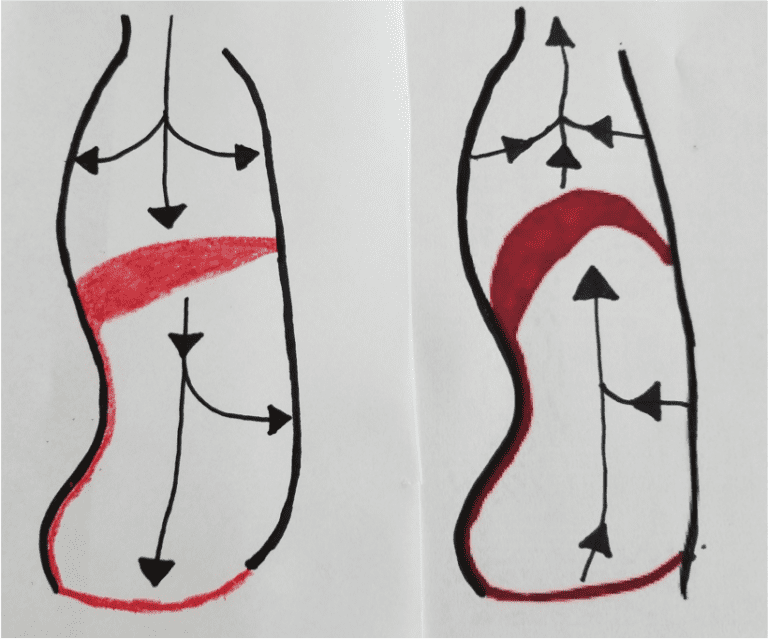
When you breathe, your respiratory and pelvic floor diaphragms need to work together to regulate the pressure in your abdominal and thoracic cavities. During inhalation both diaphragms lower/descend while during exhalation both diaphragms rise/ascend.

Inhalation and Exhalation

Focus on the sensation and movement of your pelvic floor as you breathe.

Pelvic Floor Squat Position

Equipment needed:

  • The lowest possible seat height you can comfortably sit in a squat position. The bottom step of the stairs typically works well.
  • Towel Roll or ball. 

Instructions:

  1. Position yourself in a squat position sitting on the lowest possible seat height, preferably the bottom step on your stairs. If this is not tolerable, move up a step or use some other low seat. 
  2. Place a towel roll between your legs. You should sense your inner thighs engaging. If this is not comfortable increase the size of the towel roll or cushion to comfort. 
  3. You are now going to direct your attention to your pelvic floor. 
  4. Imagine the base of your pelvic floor as an upside down flower that has fully blossomed. Now try to draw the flower up into your body. You should sense your pelvic floor lifting up into your body.
  5. While maintaining this position, inhale through your nose softly, slowly and fully.
  6. Exhale through pursed lips sensing your pelvic floor lifting up into your body while your abdominals draw in. 
  7. Repeat this for about 3 more breath cycles. 
  8. Complete ~ 3 sets of 3-5 breath cycles incorporating your pelvic floor.

Perform 2-4x/day, for the next 3-4 days. *Unless otherwise directed

  • Optionally, use your testing technique to determine your optimal frequency and duration to perform.


If you are unable to sense your pelvic floor lifting it is advised to perform the Supine 90/120 Hip Lift technique while attempting the pelvic floor lift. 


If you have significant pelvic floor issues, it is recommended to perform the Foundational Pelvis Protocol incorporating the pelvic lift during exhalation for all the techniques. 


Goals: Be able to feel the following with your neck relaxed:

    1. Your pelvic floor lift/ascend during exhale
    2. Abdominals engaging and drawing in during exhalation