


06. Expansion Based Oral Appliances and Orthodontia
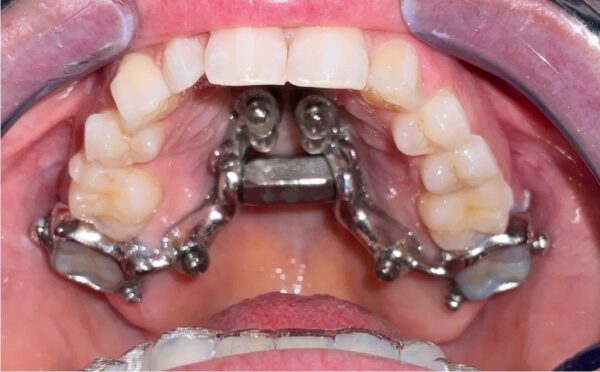
When malocclusion is a significant postural stress factor for you, in addition to an oral occlusal orthotic, you may consider going through some sort of oral appliance therapy and/or orthodontic process which will move your teeth into the proper position permanently. This will potentially open up, expand and realign your bite so you don’t need to wear an occlusal orthotic.
There are many options to consider within this category. The key difference between this route vs doing an oral occlusal orthotic is that you are seeking to make a permanent change in your bite so that it will be more aligned and promote postural neutrality. If you prefer to go a less invasive and expensive route, it is suggested to consider an oral occlusal orthotic instead.
An ideal candidate for expansion based oral appliances or orthodontia typically exhibits:
1. A narrow palate
- When you have a narrow palate you typically do not have adequate space for your tongue to rest on the roof of your mouth (palate). This promotes mouth breathing and is correlated with narrow nasal passages making it more challenging to breath through your nose. Refer here to learn more about the structural factors related to a narrow palate as well as their impact on breathing and sleep.
2. Malocclusion
- If you have significant malocclusion it likely means you:
- Don't have enough space for your teeth due to a narrow palate which creates crowding and poor teeth alignment. This in turn causes increased neuromuscular tension in your jaw, head, neck and even below in your body.
- Have parafunctional habits that are negatively impacting your tongue posture, chewing, breathing, lip seal and swallowing functions. This can in turn cause increased neuromuscular tension and abnormal teeth positioning.
- Sometimes wearing an oral occlusal appliance is not enough for someone to achieve consistent neuromuscular relaxation and neutrality. If so, then permanently opening up the dental arches and realigning the teeth is the best option for some.
3. A retruded jaw
- When your jaw is retruded it means it is posturing relatively too far back in your mouth relative to your upper arch. This position tends to be associated with:
- Poor occlusal relationships
- A tendency for the tongue to rest on the bottom of the mouth vs top on the palate (preferred).
- As the jaw slides backwards it can bring the tongue along with it resulting in a reduced sized airway. This negatively impacts breathing and sleep.
4. Sleep disordered breathing
- A narrow palate, narrow nasal passages, a retruded jaw and malocclusion are all typically associated with sleep disordered breathing. Refer here to learn more about the connections.
If you have a narrow palate, nasal passages and not enough space to fit your tongue habitually up into the roof of your mouth, widening your dental arch using various oral appliances or orthodontia may be your best solution. Since the bone (maxilla) that houses your dental arch is the base of your nasal passages, expanding it can in turn widen your nasal passages and sinus cavity making it easier to breathe.
Expansion Based Oral Appliance Therapy and Orthodontia Approaches:
1. MARPE
- MARPE refers to Microimplant Assisted Rapid Palatal Expansion uses microimplants anchored in the palate and maxillary bone to achieve rapid skeletal expansion, typically over a period of 3–6 months. Once the desired expansion is achieved, the appliance is maintained to allow the newly widened bone to remodel and stabilize. Orthodontic treatment, such as Invisalign or braces, is then used to align the teeth and optimize the bite.
- This approach provides the most true palatal expansion (skeletal expansion) and has been shown to increase the width of the nasal cavity and surrounding airway structures.
- MARPE is generally best suited for individuals who require significant expansion and/or improved nasal patency. While removable oral expansion appliances, Invisalign, and traditional braces can produce some widening of the palate through dental and alveolar bone remodeling, they are limited in the amount of expansion they can safely achieve and have not been shown to significantly widen the nasal cavity.
- When excessive force is used to create dental expansion alone, teeth may be moved beyond the supporting bone, potentially leading to bone loss, gum recession, instability, and other periodontal complications.
- Because MARPE achieves expansion through the underlying skeletal structures rather than primarily by tipping teeth outward, it greatly reduces the risk of moving teeth outside their supporting bone.
2. Upper Palatal Expander
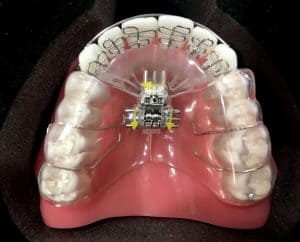
- There are many different types of removable upper palatal expansion appliances. The DNA Appliance is a popular option designed to promote both forward and lateral expansion of the upper arch and typically incorporates bilateral bite blocks. These appliances are generally worn for approximately 16 hours per day, and treatment often takes 1–2 years to complete. Orthodontic treatment, such as Invisalign or braces, may be required afterward to optimize tooth alignment and bite relationships.
- Because the appliance occupies space within the palate, the tongue often rests in a lower position during treatment. As a result, some individuals may benefit from tongue posture retraining and myofunctional therapy following treatment to help restore optimal tongue position and function.
- While removable expansion appliances can be effective in selected cases, the amount of expansion that can be predictably achieved is generally less than that of skeletal expansion techniques such as MARPE. Much of the expansion produced by removable appliances may occur through dental and alveolar bone remodeling rather than true skeletal widening. If excessive dental expansion is attempted, teeth can be moved beyond their ideal position within the supporting bone, potentially increasing the risk of gum recession, bone loss, tooth instability, and relapse. Treatment outcomes are also highly dependent on patient compliance, as the appliance must be worn consistently to achieve the desired results.
- For individuals who require substantial expansion, have significant airway concerns, or desire a greater degree of skeletal widening, MARPE may be a more appropriate treatment option. Because MARPE uses microimplants anchored in the palate and maxillary bone, it can achieve expansion through the underlying skeletal structures while minimizing the risk of moving teeth beyond their supporting bone.
3. Homeoblock
- The Homeblock is a removable upper arch expansion appliance designed to promote both forward and lateral development of the maxilla. Unlike many other removable expanders, it incorporates an asymmetrical bite block intended to influence facial growth patterns and address asymmetries in craniofacial development. The appliance is typically worn during sleep and for an additional four hours during the day. Treatment commonly takes 1–2 years to complete, and orthodontic treatment such as Invisalign or braces may be required afterward to optimize tooth alignment and bite relationships.
- Because the appliance occupies space within the palate, the tongue often rests in a lower position during treatment. As a result, some individuals may benefit from tongue posture retraining and myofunctional therapy following treatment to help restore optimal tongue position and function.
- While the Homeoblock may be an appropriate option for selected individuals, the amount of expansion that can be predictably achieved is generally less than that of skeletal expansion techniques such as MARPE. Much of the expansion produced by removable appliances may occur through dental and alveolar bone remodeling rather than true skeletal widening. If excessive dental expansion is attempted, teeth can be moved beyond their ideal position within the supporting bone, potentially increasing the risk of gum recession, bone loss, tooth instability and relapse. Treatment outcomes are also highly dependent on patient compliance, as the appliance must be worn consistently to achieve the desired results.
- For individuals who require substantial expansion, have significant airway concerns or desire a greater degree of skeletal widening, MARPE may be a more appropriate treatment option. Because MARPE uses microimplants anchored in the palate and maxillary bone, it can achieve expansion through the underlying skeletal structures while minimizing the risk of moving teeth beyond their supporting bone. Patients considering either approach should discuss their goals, anatomy, airway concerns and orthodontic needs with their treating provider to determine the most appropriate treatment option.
4. ALF
- The ALF (Alternative Lightwire Functionals) appliance is a light-wire orthodontic appliance designed to encourage gradual arch development while also influencing neuromuscular function and craniofacial balance. In addition to guiding dental arch form, ALF therapy is often described as addressing the relationship between the teeth, tongue posture, airway and the surrounding cranial and facial bones, with the intent of supporting more optimal functional patterns over time.
- Compared to bulkier removable expansion appliances such as the DNA Appliance and Homeoblock, the ALF is generally less bulky and uses very light, continuous forces. It is most commonly fixed in place, although removable versions are sometimes used depending on the clinical approach. Because it occupies minimal space within the palate, the tongue may more easily maintain a higher resting position against the palate during treatment. Patients are also typically able to speak more normally compared to bulkier intraoral appliances.
- The ALF is generally intended to be worn 24 hours per day, and treatment commonly takes 1–2 years to complete. Orthodontic treatment such as Invisalign or braces may be required afterward to refine tooth alignment and finalize the bite. Because forces are light and changes are gradual, treatment often requires ongoing monitoring and patient consistency over time.
- While the ALF may support dental arch development and functional improvements, the amount of predictable skeletal expansion is generally less than that of skeletal expansion approaches such as MARPE. Much of the change associated with ALF therapy may occur through dental adaptation, alveolar remodeling and neuromuscular re-patterning rather than direct skeletal widening. Outcomes can also vary depending on individual anatomy, functional habits, and treatment compliance.
- For individuals who require substantial expansion, have significant airway concerns or are specifically seeking greater skeletal widening, MARPE may be a more appropriate option in certain cases. Because MARPE uses microimplants anchored directly into the palate and maxillary bone, it is designed to achieve expansion primarily through skeletal structures while minimizing the risk of excessive dental tipping or moving teeth beyond their supporting bone. Patients considering ALF, MARPE, or other expansion approaches should work with their provider to evaluate skeletal anatomy, airway considerations, tongue posture and orthodontic goals to determine the most appropriate treatment plan.
5. Myobrace
- The Myobrace is a relatively low-cost pre-orthodontic appliance system designed to support dental arch development, tooth alignment and orofacial muscle re-education. It works by influencing oral posture and functional habits, with the goal of encouraging a more ideal resting position of the tongue and improved swallowing and breathing patterns.
- In addition to these functional goals, the Myobrace is intended to help reduce reliance on an existing bite pattern by guiding the teeth and jaws toward a more balanced occlusion over time. It encourages the tongue to rest against the palate, which may reduce pressure on the posterior teeth and support more favorable eruption of the back molars in some cases. The appliance may also assist in mild expansion and alignment of the dental arches, and in certain cases may be used as part of a broader approach aimed at improving jaw posture and airway function.
- It is typically worn during sleep and for at least one hour during the day. Treatment outcomes can vary based on compliance, growth pattern and case complexity. In some instances, changes in occlusion may lead to an edge-to-edge bite or other transitional bite changes, which may require additional orthodontic treatment or appliance therapy to refine.
- There are several different Myobrace series and appliance types, each designed for different age groups and clinical needs. Because outcomes are highly dependent on individual factors, it is recommended to consult with a qualified Myobrace provider or dentist trained in myofunctional orthodontic approaches if this system is being considered.
6. Orthodontia
- Orthodontic treatment may include traditional braces or clear aligner therapy such as Invisalign. Both approaches can be used to align the teeth, refine bite relationships and in some cases support limited dental arch development when guided by appropriate treatment planning.
- It is important to distinguish between dental expansion and skeletal expansion. Orthodontic treatment with braces or aligners primarily produces dental changes through tooth movement within the existing bone, along with remodeling of the surrounding alveolar bone. This can improve arch form and bite alignment but does not directly create skeletal widening of the upper jaw. Skeletal expansion refers to changes in the underlying maxillary bone structure, which is typically addressed through other treatment modalities such as MARPE in appropriate cases.
- Invisalign and other modern clear aligner systems have advanced significantly and are now capable of achieving a wide range of complex tooth movements that were previously thought to require fixed braces. In many cases, aligners can address crowding, spacing and bite correction as well as certain controlled vertical changes when used by an experienced provider with an expansion and airway informed approach.
- Traditional braces may still be preferred in specific situations where maximum control is desired, such as highly complex movements or cases requiring very detailed control of individual tooth position and vertical relationships. However, both braces and aligners primarily operate within the framework of dental movement rather than skeletal expansion.
- Working with a airway minded provider who understands airway considerations, arch development and the difference between dental and skeletal expansion can be beneficial, particularly when treatment goals extend beyond alignment to include broader functional and structural considerations.
- Ultimately, the most appropriate orthodontic approach depends on individual anatomy, bite relationships, treatment goals and provider expertise and should be determined in collaboration with a qualified clinician.
How do you know if you would benefit from expansion based oral appliance therapy or orthodontia?
- Because the primary reason you would be undergoing this process would be to balance and realign your bite and improve your breathing, you first need to determine what is negatively impacting these factors.
Instructions:
- Perform a few Physical Resonance Tests to get a baseline of how you feel and your current range of motion. Specifically check the neck, shoulder and the nasal occlusion breathing tests.
- Bite/Occlusion Influence
- Do the following tests. After each one, re-check your Physical Resonance Test to determine if it is better, worse or the same as your baseline.
- Bilateral Molars using:
- Full Coverage Bite Wafer
- Molar Only Coverage Bite Wafer
- Place a Q-tip between both of your 1st molars
- Place a Q-tips between both of your 2nd molars
- Left molars (the most common location) using:
- A unilateral bite plate or a tongue depressor between your left molars
- 1 Q-tip between your left 1st molars
- 1 Q-tip between your 2nd molars
- Right molars (least common location) using
- A unilateral bite plate or a tongue depressor between your right molars
- 1 Q-tip between your right 1st molars
- 1 Q-tip between your right 2nd molars
- Bilateral Molars using:
- Do the following tests. After each one, re-check your Physical Resonance Test to determine if it is better, worse or the same as your baseline.
- Palatal Influence
- Perform manual palatal expansion using lateral pressure on your palate using your thumbs.
- Place your thumbs up inside your palate and provide a gentle outward (lateral) expansion or opening stretch. Complete this all along the inside of your palate pressing against your palate and not your teeth. Hold for 15-45 seconds and breathe.
- After completing, you may close your mouth but do not let your teeth touch until you finish your re-testing.
- Immediately re-test and determine if it is better or worse than your baseline.
- Perform manual palatal expansion using lateral pressure on your palate using your thumbs.
- Nasal Influence
- Perform the nasal expansion test
- Manually expand your nose OR use a Nasal Dilator (you may see varying results amongst them). We prefer the intake breathing strips.
- Try to not let your teeth touch until you finish your re-testing.
- Immediately re-test and determine if it is better or worse than your baseline.
- Perform the nasal expansion test
Interpreting the Results
- If your tests improve only with the Bite/Occlusal tests it indicates that addressing your occlusion could be helpful and that expansion may not necessarily be needed.
- This may involve an oral occlusion appliance or orthodontia.
- If your tests improve with both Bite/Occlusal tests AND Manual Palatal Expansion it indicates that addressing your occlusion concurrently with palatal expansion (skeletal or dental expansion) may be best.
- If your tests improve with all three: Bite/Occlusal, Palatal and Nasal it indicates that addressing your occlusion with palatal expansion but specifically with skeletal expansion (ex: MARPE) may be best. This is because MARPE will genuinely expand both your palate and your nose.
- If your tests improve with just Palatal or both Palatal and Nasal influence you may benefit from palatal expansion but specifically skeletal such as MARPE.
- If your tests improve with just Nasal you could be a skeletal expansion candidate such as MARPE but it is suggested to further investigate what could be causing Chronic Nasal Congestion for you.

Other Important Considerations for Expansion Based Oral Appliances and Orthodontia
- Ensure that your appliance is appropriately balanced and adjusted so that when you have it in your mouth it is promoting neutrality in your head and neck. Use your nasal occlusion breathing and neck range of motion tests to monitor this.
- A key aspect to any oral appliance therapy or orthodontic process is that you are concurrently working on promoting neutral alignment throughout the rest of your postural system. When your bite is off you most likely have alignment issues elsewhere in your body such as your head, jaw, neck and below.
- The bones in your head and neck strongly influence the position of your teeth. If you only move teeth on a crooked postural system and don’t also work to simultaneously realign your postural system you will likely just reinforce the mal-alignment in the rest of your body. Consult The Postural Restoration (PRI), Fundamental Movements and the Face and Mouth Integration sections of the Master Guide for guidance.
You may require additional or other interventions.
Browse the following 8 options or you may use your testing technique to determine if any pertain to you.
Enjoy these other related Master Guide items to Resonate Health:
Disclaimer and Copyright
This content is being provided for informational purposes only and is not a substitute for medical advice. This content has the potential to produce healing and detox responses. Please consult your medical doctor or professional if you have medical concerns. If you experience any discomfort or adverse effects discontinue.
©️ 2022 Resonate Health. This content may not be duplicated, copied or shared unless authorized.
Support the Master Guide
If this Master Guide has supported you, please consider making a donation to help keep this free resource available.

CONTACT US
PRIVACY POLICY
TERMS OF SERVICE
CONDITIONS AND CONSIDERATIONS INFORMATION
© Resonate Health 2026 Available Offerings FAQ Shop Articles Case Studies Testimonials Original design by Abracadabra Creative | Ongoing development by Christian McFarland