


01. Body Witness Self-Reflection
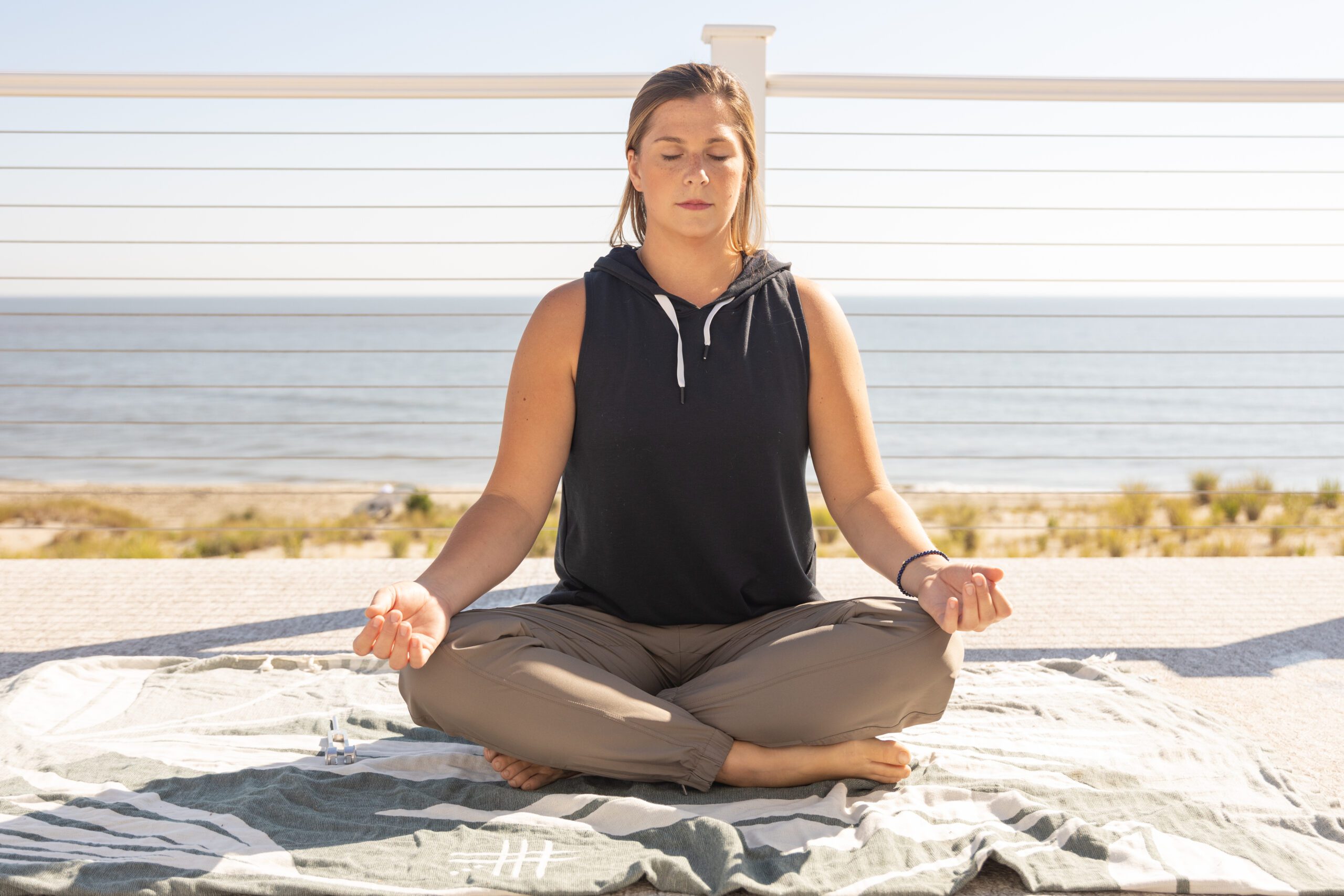
One of the most important ingredients to gaining competency in conscious personal mastery is the ability to witness yourself. What exactly does this mean?
To witness yourself means to impartially consciously observe what and how you are sensing, feeling, thinking, behaving and perceiving. You are able to abstain from judgment and any attachment to your observations.
This is particularly challenging when trying to witness the shadow parts of you. However, being able to objectively observe yourself within your shadow is a critical element to optimizing your health, resonance and self-mastery.
To fully witness your physical self and body involves using all your senses to notice where you feel comfortable and relaxed as well as any areas of tension, restriction or pain. It also includes knowing exactly where you are in space relative to everything around you. This requires integrating all the information from your sensory receptors within your eyes, ears, nose, tongue, skin, fascia, muscles, joints and ligaments to determine your level of alignment, relaxation, physical mobility, balance and overall level of grounded-ness.
This self-reflection encourages you to bring all of your attention and awareness into the present moment, with all of your senses. You may focus on one sense at a time or focus on everything you sense in the moment.
Use this technique as a way to ground yourself in the present moment. This supports reducing anxiety, stress and any other dys-regulation.
Reflect on how you feel physically in the present moment for ~3-8 minutes, at least 2-3x/day for the next 1-2 weeks. *Unless otherwise directed.
- Optionally use the Body Witness Self-Reflection prompts and save it in your journal below for later reference.
- When reflecting you don’t have to do anything or change anything, this practice is focused on bringing your awareness to your body. Just witness and monitor what you notice.
- Perform this self-reflection again in about 2 weeks to assess your progress and to gather any new information to continue to support you and your greatest good.
- Optionally, use your testing technique to determine what area of your body or physical sense to focus on, and your optimal frequency and duration to perform this self-reflection.
Preparation Recommendations for this self-reflection:
- Set your Intention
- Use this or adapt to create your own:
- “I set the intention to be open, neutral and curious about my body and myself, so I may witness what I am truly experiencing without judgment or criticism."
- State your intention out loud and write it down or in your journal to increase the power of this reflection experience.
- Use this or adapt to create your own:
- Location
- A quiet and safe space where you will be undisturbed is ideal.
- At anytime during the day or when going to bed.
- Position
- Get as comfortable as possible, seated or lying down.
- Use these suggested positions to meet your unique needs.
Body Witness Self-Reflection prompts:
- Reflect on how you feel physically in the present moment using the prompts below.
- You don’t have to do anything or change anything, this practice is focused on bringing your awareness to your body.
- Log any other body witness self-reflection comments in your journal below.
Body Scan:
Scan your body from your toes to the top of your head, and from your head to your toes.
- Are there areas that feel comfortable, relaxed and free?
- Are there areas of discomfort, tension or pain?
- Does your body feel symmetrical or asymmetrical?
- Do any areas feel familiar or foreign?
- What do you notice and feel about your body?
- Without judgement, what are you noticing and ready to reflect on from scanning your body?
Listen:
Witness what you hear:
- Notice the sounds you hear around you.
- Where are they coming from?
- Do you like or dislike what you hear?
- Describe what you hear.
Look:
Witness what you see:
- Notice what you see around you, particularly within your peripheral field of vision.
- Do you sense your peripheral vision is equal side to side?
- Do you like or dislike what you see around you?
- Describe what you see.
Taste:
Witness what you taste:
- When you eat, notice the quality and nature of the taste of your food.
- Do you like or dislike what you are eating or what you typically eat?
- Is there any experience when not eating that "gives you a bad taste"?
- Describe what you taste.
Smell:
Witness what you smell:
- Notice the smells around you.
- What might they be?
- Do you like or dislike what you smell?
- Describe what you smell.
Physical sense:
Witness how you sit and move:
- Are you aware of what your body is doing, when you are physically moving and doing something?
- Notice how you tend to sit, stand and walk.
- Is there a particular posture you tend to adopt?
- Is there a difference side to side?
- Notice how much you are sedentary vs active and moving around.
- What physical activities do you most enjoy? Dislike?
- Describe what you sit and move.
Response and Interaction:
Witness how you respond and interact:
- Notice your ability to listen to and your response to your needs for water and sustenance.
- Do you hydrate enough?
- Do you eat foods that are nourishing for you?
- Do you tend to under or overeat?
- How is your sleep?
- Do you get enough? Is it restful?
- Do you listen to your body when you need to fulfill basic human needs?
- Observe if you have any physical reactions to certain foods, environments and/or people.
- Describe how you respond and interact.

Enjoy these other related Master Guide items to Resonate Health:
Disclaimer and Copyright
This content is for informational purposes only and is not a substitute for medical advice. Please consult your medical doctor or professional if you have medical concerns.
©️ 2022 Resonate Health. This content may not be duplicated, copied or shared unless authorized.
Support the Master Guide
If this Master Guide has supported you, please consider making a donation to help keep this free resource available.

CONTACT US
PRIVACY POLICY
TERMS OF SERVICE
CONDITIONS AND CONSIDERATIONS INFORMATION
© Resonate Health 2026 Available Offerings FAQ Shop Articles Case Studies Testimonials Original design by Abracadabra Creative | Ongoing development by Christian McFarland