


When we think about the way we breathe, chew or swallow, we rarely consider how deeply those small movements are connected to the rest of the body. Yet every breath, chew and swallow depends on an intricate coordination between our face, tongue, neck and diaphragm. These subtle rhythms shape how we feel grounded, how we rest and how we resonate.
This is where myofunctional exercises come in. They’re gentle movements that retrain the muscles of the face, mouth and tongue to work in balance with breathing and posture. When practiced with whole-body awareness, they become more than exercises — they become a way to reawaken craniofacial resonance, to support effortless breathing, expression and vitality.
What is Craniofacial Resonance?
At Resonate.Health, resonance describes the natural state of being when our physical, emotional and energetic systems vibrate in harmony.
Craniofacial resonance refers to this same principle within the head and face — when the structures that shape our airway, tongue, jaw and neck can rhythmically function in three dimensions of movement.
When the face and head are out of balance — such as from poor tongue posture, chronic mouth breathing or tension in the jaw and neck — the entire system can lose its vibration. Breathing may become shallow, the shoulders tighten and even emotional regulation can be affected. By restoring resonance in this area, we support the flow of energy, oxygen and ease throughout the whole body.
.
The Different Types of Myofunctional Exercises
Each group of exercises helps awaken a specific aspect of craniofacial function while staying connected to the body’s natural movement and breath. These include:
- Tongue Posture and Mobility
- Nasal Breathing and Lip Seal
- Swallowing
- Diaphragmatic Breathing
Tongue Activation and Awareness
The tongue is a major postural muscle. When it rests against the roof of the mouth, it helps support the airway and cranial balance.
Gentle exercises such as sliding the tongue along the palate, tracing circles or pressing it lightly upward teach it to move freely and rest in its natural place. These movements encourage more spacious breathing and support balance through the neck and spine.

Tongue Stretch for Improved Palate Contact
Purpose:
To release tight tissue under the tongue and improve how the tongue connects with the palate for better breathing and balance.
How to do it:
- Wrap a napkin or paper towel (something with a bit of texture and thickness) around your tongue, near the base.
- Feel for the fibrous band underneath (the frenulum).
- Hold the tongue gently at this point with your thumbs.
- Lift the tongue upward toward the roof of your mouth — especially toward areas that feel tight or restricted.
- Adjust the stretch by opening and closing your jaw.
- You can also move your jaw side to side to reach different muscle fibers.
- Hold for 1–2 minutes, repeating several times throughout the day.
- This exercise is easiest to do while lying on your back, though you can also do it sitting or standing.
Afterward:
Notice how much more of your tongue touches the roof of your mouth. You should feel more contact toward the back — a sign that your craniofacial system is rebalancing and ready to integrate with full-body movement and breath.

Monkey Circles
How to do it:
- Close your lips lightly and keep your teeth slightly apart.
- Use the tip of your tongue to trace slow circles along the inside of your lips and cheeks — like drawing a loop all around your mouth.
- Move clockwise, then counterclockwise, keeping your breath steady.
- Feel the gentle stretch through your cheeks, jaw, and the base of your tongue.
- Repeat 3–5 circles in each direction, one or two times per day.

The Snake
How to do it:
- Point your tongue straight out and hold for about 5 seconds.
- Slowly slide your tongue backward along the roof of your mouth, aiming to touch the posterior part of the soft palate.
- Keep movements slow, controlled, and mindful, focusing on smooth motion and coordination.
- Repeat 10–15 times per session.
Palatal Sweeps
How to do it:
- Move your tongue between your outer teeth and cheek to one side.
- Glide over your molars and along the palate to the other side of your outer teeth and cheek.
- Repeat back and forth 10 cycles keeping movements slow, controlled, and mindful, focusing on smooth motion and coordination.
Nasal Breathing and Lip Seal
The ideal way to breath is through your nose vs your mouth. Nasal breathing provides multiple physiological benefits compared with mouth breathing:
- Warms and humidifies air, improving gas exchange
- Promotes nitric oxide (NO) production, which:
- Sanitizes inhaled air
- Acts as a vasodilator, improving lung gas exchange and blood pressure
- Reduces airflow volume compared to mouth breathing (~6 L/min vs 12–15 L/min), lowering hyperventilation risk and airway collapse potential
- Helps regulate CO₂ levels, which are critical for oxygen release
In order to effectively breathe through your nose, you need to be able to maintain consistent lip closure, referred to as "lip seal." Individuals who habitually mouth breathe tend to have incompetent lip seal as they are posturing with their mouth open much of the time. Myofunctional exercises designed to strengthen and train the lips to naturally close can be very helpful for individuals with this pattern.
If you have nasal congestion try this technique to help clear it before proceeding to lip seal techniques:
Nasal clearing technique (Patrick McKeown, Buteyko method)
How to do it:
- Exhale normally, pinch your nose, and close your mouth
- Hold your breath until you feel the urge to inhale
- Move your head forward/backward, side-to-side, and tilt side-to-side to flush nasal tissues
- Repeat 4–5 times
- Check if nasal breathing with lip seal is easier
If nasal congestion persists:
- Consider removing foods that can promote congestion. Dairy, eggs or gluten can be particularly mucous-producing; try at least a 3-week elimination of ALL of these
- ENT or dentist referral may be needed for structural issues:
- ENT: surgical enlargement of nasal cavity
- Dentist: palatal expansion (MARPE, Homeoblock, DNA Appliance, ALF) to increase airway space and improve neuromuscular function
- Start expansion early in children (deciduous molars, ~age 2–3) for best results
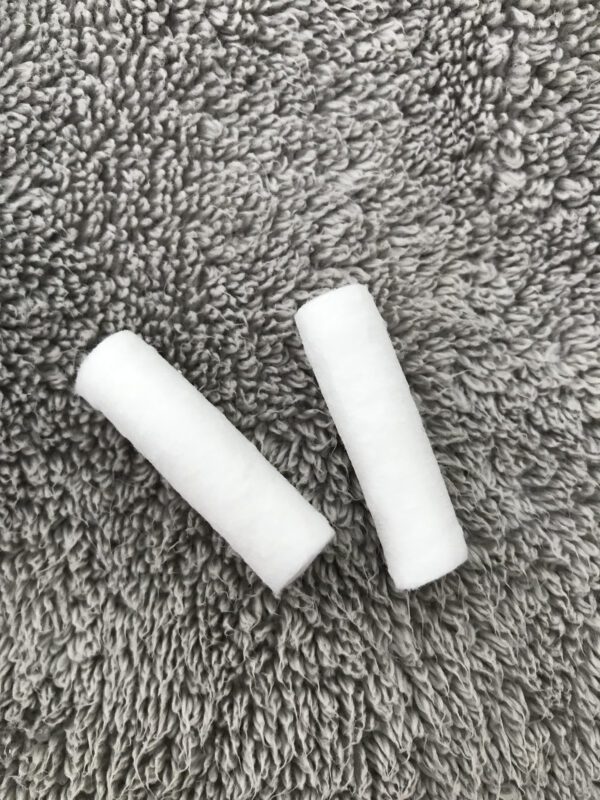

Cotton Roll Hold
How to do it:
- Place cotton rolls between your upper lip and gum and lower lip and gum while maintaining lip closure.
- Hold for 3-20 minutes to help stretch your lips while also strengthening them to maintain lip seal.

Lip Stretching
How to do it:
- Grab upper lip and pull up and away from your gums until you feel a stretch.
- Hold for 30-60 seconds.
- Repeat for the lower lip pulling down and away from your gums until you feel a stretch.
- Repeat 3 times throughout the day.

Pucker
How to do it:
- Pucker lips and make a loud kissing sound.
- Say "Doe" aloud.
- Alternate between these 10 times each to enhance your lip seal.

Lip Press
How to do it:
- Place a flat object like a tongue depressor between your lips
- Hold for 3-15 minutes to improve your lip seal.
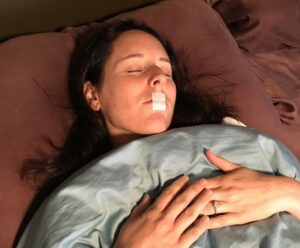
Lip Taping: Supporting Nasal Breathing Overnight
For individuals who struggle with mouth breathing during sleep, lip taping can be a gentle way to reinforce lip seal and nasal breathing patterns, improving nitric oxide production and oxygenation. It also helps to ensure proper tongue posture against the palate which can reduce snoring and airway collapse.
How to do it safely:
- Use a hypoallergenic, breathable tape designed for skin application.
- Place a small strip horizontally across the closed lips in a positioned in a wide smile before sleep.
- Start with short periods while awake and gradually increase duration as comfort allows.

Breathing Training: Connecting the Tongue, Lips and Diaphragm
This balloon breathing exercise can improve airway function, strengthen the tongue and lips and optimally position the diaphragm for resonant breathing patterns.
How it helps:
- Strengthens the tongue and lip muscles
- Improves upper airway function
- Can reduce sleep apnea episodes, as supported by Guimaraes et al. (2009)
- Similar effects are seen with didgeridoo playing, which improves airway dilator function and breathing patterns (Puhan et al., 2006)
How to do it:
- Inflate a balloon with a slow, controlled exhale.
- Place your tongue up on your palate to prevent air from escaping. Do not pinch the balloon with your fingers, lips or teeth to prevent air from escaping. The purpose is to regulate the pressure through your abdominal and oral cavities.
- Pause briefly after exhaling before inhaling.
- Exhale again into the balloon.
- Repeat several times, maintaining steady, relaxed breaths until the balloon is fully inflated.
Swallowing Exercise: Coordinating the Tongue, Lips and Jaw
Swallowing is more than just moving food from your mouth to your stomach — it’s a key movement that integrates the tongue, lips, jaw and airway. Practicing controlled swallowing exercises can improve tongue posture, strengthen lip seal and support efficient breathing patterns.
How to practice:
- Start with water. Once inside your mouth gather it on top of your tongue.
- Place the tip of your tongue against the roof of your mouth, just behind the upper teeth.
- Smile so your lip muscles do not overly tense without letting the water escape.
- Swallow without letting your tongue move forward
- Repeat 10 times per session, 1-3 sessions per day.
Conclusion
Myofunctional therapy is more than a set of exercises — it’s a way to reconnect the small, subtle movements of your tongue, lips and jaw with the rhythm of your whole body. By practicing these exercises consistently, you can strengthen your lip seal, improve nasal breathing, support proper tongue posture and enhance swallowing mechanics. These changes ripple through your entire postural system optimizing airway function, and even helping to regulate emotional and energetic balance, helping you feel more grounded, centered and alive.
By dedicating a few minutes each day to these practices, you’re not just training muscles — you’re cultivating harmony between your face, your airway and your entire body, promoting long-term health, comfort and vitality.
This content is being provided for informational purposes only and is not a substitute for medical advice.
Please consult your medical doctor or professional if you have medical concerns.
©️ 2022 Resonate Health. This video may not be duplicated, copied or shared unless authorized.