

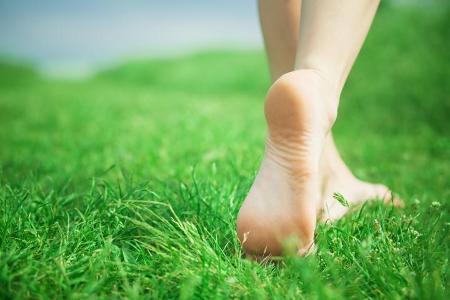
The phrase “being grounded” has become a common expression in modern wellness circles, often associated with feeling calm, stable and balanced. But what does it truly mean to be grounded? Beyond metaphor, grounding can be understood through interconnected physical, physiological and emotional systems. In this article, we’ll explore grounding from an electrical, postural, breathing and emotional perspective—and how these dimensions shape our overall health.

The Electrical Connection: Reconnecting with the Earth
The human body constantly generates free radicals through normal metabolic processes. Left unchecked, these reactive oxygen species can contribute to inflammation and oxidative stress. Antioxidants neutralize free radicals by donating electrons, and interestingly, the earth’s surface has a natural reservoir of electrons that can help replenish this balance.
When our bare skin makes direct contact with the ground—or when we use conductive materials such as grounding mats, sheets or wristbands connected to the grounded portion of an outlet—electrons can flow into the body, helping neutralize oxidative stress (Chevalier et al., 2012). This simple yet profound connection is sometimes referred to as earthing.
Modern living often disrupts this relationship. We spend much of our time indoors, insulated by shoes and synthetic surfaces that block the body’s natural electrical exchange with the earth. Historically, humans walked barefoot, worked outdoors and slept close to the ground. Today, many people rarely experience true barefoot contact with natural earth. This may explain why walking barefoot on a beach or soft grass often feels deeply restorative. We’re not only engaging our senses with nature—we’re also receiving a subtle electrical nourishment.
The Postural Connection: Grounding Through Movement
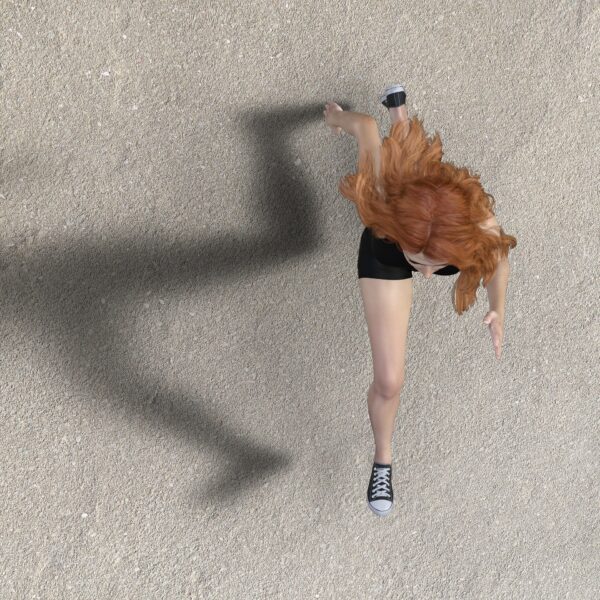
From a postural perspective, being grounded means the body accurately perceives and relates to the ground. Our postural system—integrating visual, auditory, vestibular and sensory-motor input—helps us orient to gravity through learned patterns.
Movement, especially walking, expresses this dynamic grounding. Each step alternates between one leg bearing weight (grounded) and the other moving freely (ungrounded). This alternating pattern engages coordinated chains of muscles that link the feet, pelvis, spine, jaw and even the eyes. When we lose balanced coordination between these left and right patterns, our sense of stability and grounding can diminish.
The Postural Restoration Institute (PRI) approach emphasizes restoring these natural relationships. Through specific repositioning and breathing techniques, PRI helps the body regain symmetry and connection to the ground—a foundation for both structural balance and physiological calm.
The Breathing Connection: Exhale to Ground
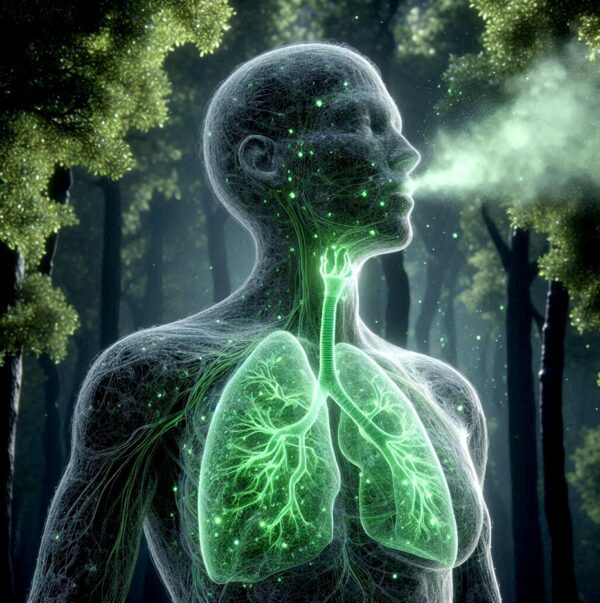
Breathing and posture are inseparable. Inhalation and exhalation mirror the alternating phases of walking: one expands, the other returns. During inhalation, the diaphragm contracts and lowers while the rib cage lifts and opens. During exhalation, the diaphragm relaxes and rises back into its domed position, allowing the rib cage to settle downward.
A full, balanced breath cycle supports efficient postural alignment and vice versa. However, modern stress patterns often disrupt this rhythm. Many people live in a chronically “inhaled” state—chest lifted, tense shoulders tense, shallow breath pattern—reflecting sympathetic overactivation. This correlates with tight hip flexors, low back tension, forward head posture and an overall sense of being “ungrounded.”
Exhalation is the body’s natural grounding phase. It invites the diaphragm to relax, the rib cage to settle and the nervous system to shift toward a parasympathetic calm state of being. Relearning how to exhale fully is a foundational step in restoring balance and authentic presence.

The Emotional Connection: Breath, Fear and Grounding
Our emotional state profoundly influences breathing and posture. Research from Northwestern University found that during inhalation, people were more likely to encode and remember fear-based stimuli compared to exhalation (Zelano et al., 2016). Inhalation activates the amygdala and hippocampus—regions involved in emotional processing and memory—making us more receptive to fear and stress.
This relationship also works in reverse: chronic anxiety can reinforce shallow inhalation patterns and postural rigidity. In this way, emotional and physical grounding are mutually reinforcing. Learning to exhale deeply, release tension and reconnect with the support of the ground can help down-regulate fear responses and restore emotional steadiness.

Restoring Grounding Across All Systems
To cultivate a grounded state, we can address these dimensions holistically:
- Electrical: Reconnect physically with the earth through barefoot contact or earthing tools.
- Postural: Reestablish balance and symmetry through mindful movement or postural restoration techniques.
- Breathing: Practice full, rhythmic exhalations to relax the diaphragm and calm the nervous system.
- Emotional: Bring awareness to fear-based patterns and cultivate emotional safety through body-based practices.
When these elements align, grounding becomes more than a concept—it becomes a lived experience of stability, flow and presence.
Final Reflection
Grounding reminds us that health begins with connection—connection to the earth, to breath, to movement and to our own emotional rhythm. By integrating these relationships, we restore both physical and energetic harmony.
Breathe deeper. Feel your roots. Reconnect with the earth’s quiet intelligence and rediscover what it means to truly be grounded.
Chevalier, G., Sinatra, S. T., Oschman, J. L., Sokal, K., & Sokal, P. (2012). Earthing: Health implications of reconnecting the human body to the earth’s surface electrons. Journal of Environmental and Public Health, 2012, 291541. https://doi.org/10.1155/2012/291541
Zelano, C., Jiang, H., Zhou, G., Arora, N., Schuele, S., Rosenow, J., & Gottfried, J. A. (2016). Nasal respiration entrains human limbic oscillations and modulates cognitive function. Journal of Neuroscience, 36(49), 12448–12467. https://doi.org/10.1523/JNEUROSCI.2586-16.2016
This content is being provided for informational purposes only and is not a substitute for medical advice.
Please consult your medical doctor or professional if you have medical concerns.
©️ 2022 Resonate Health. This video may not be duplicated, copied or shared unless authorized.