08. Being barefoot

It’s time to go barefoot!

If you frequently go barefoot inside and outside, or walk around in socks, then this practice may be a reminder of the importance of walking barefoot. Perhaps the next time you are barefoot, bring your awareness to being barefoot.

If you are new to being barefoot, then it is important to incrementally experience walking this way. You most likely spend the majority of your time in shoes, which has in some way separated you from the ground, floor and the true sensation through your feet. 

Restoring your connection to barefoot walking reconnects you to the Earth and the greater electromagnetic field that most shoes interfere with, especially if they have a rubber base. Earth is a natural reservoir of electrons which serve as antioxidants to your body. The block that shoes create from this electrical source can contribute to inflammation, pain, dis-ease and more. 

This barefoot practice allows you to finally be “grounded”, discharge the energy that has been collecting in your body and reconnect you with the healing power of nature. Barefoot walking outside, on your choice of natural Earth, is one of the most powerful healing tools there is. 


Instructions

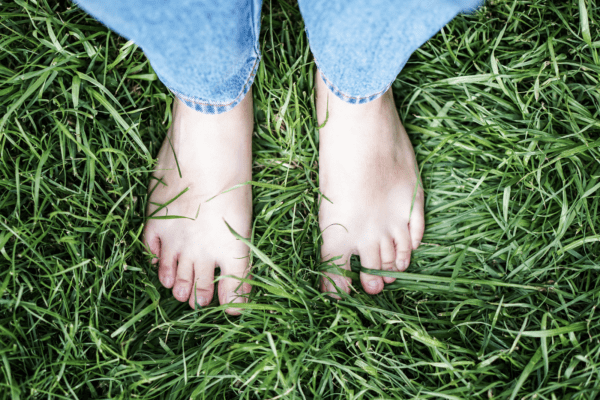
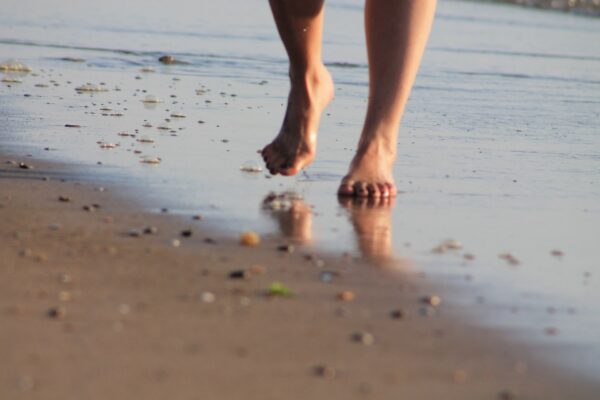
  1. Go outside, take your shoes off and place your bare feet on any natural earth. Breathe and focus on grounding, slowing things down and relaxing.
  2. Perform for ~3-7 minutes, 2-3x/week or for as long and as often as desired. *Unless otherwise directed. Optionally, use your testing technique to determine your optimal frequency and duration to perform.

Some individuals do not have adequate postural stability in their feet to tolerate barefoot standing and walking. If so, they may need to take advantage of being barefoot in seated or laying down positions. Using a grounding sheet or mat can also be beneficial. Refer here on how to test if being barefoot has any benefit for your postural system or if you may require additional sensory support.


Bonus Journal Prompt:

Reflect on:

  1. How it feels on the different parts and sides of your feet
  2. Where your feet contact the ground
  3. Where you body weight naturally rests in your feet
  4. The difference between your right and left foot
  5. Any aspects of your feet that may avoid the ground
  6. How you feel connected and supported by the Earth. This may include sensing the electromagnetic exchange between you and the Earth.
  7. How does it feel to be on grass, sand, dirt, rock, etc.
Tips
  • Outside is best! 
  • If you can't make it outside then use grounding practices inside.
  • If you are prone to foot cuts, stubbed toes, tripping, finding the sharp object to step on, have poor circulation, or have been diagnosed with diabetes or other disease prone to wounds, it is important to be extremely self-aware when practicing barefoot walking.
    • Clean and clear the area where you plan to walk so there are no sharp or unknown objects.
  • Be mindful of your barefoot “dosage.” If you are prone to foot pain or it’s been a long time since you spent time barefoot, start slow and gradually build up. 
  • When you practice barefoot walking, let it be the ONLY thing you are doing and focusing on. Be present connecting to the ground, be with your feet.