02. Diaphragmatic Breathing Part 1: The Exhale

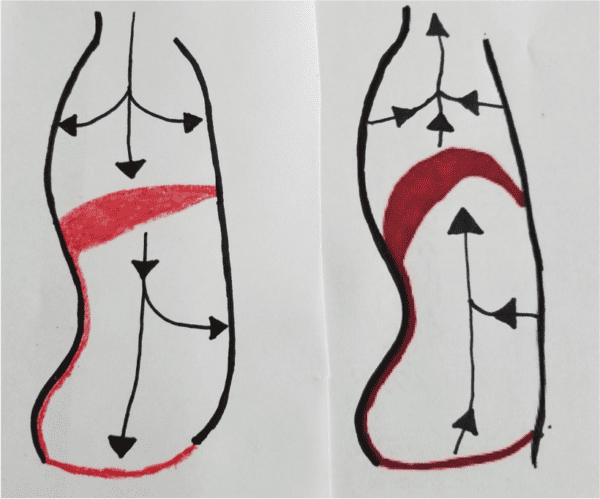
The goal in this breathing technique is to restore your resting diaphragm position to a more relaxed and domed position vs a flattened position. If you refer to the below diagram you will see that as you take air into your lungs your diaphragm muscle descends and flattens. This also creates some (not a lot) distension in your abdomen and pelvic floor. During exhalation your diaphragm rises along with your pelvic floor and your abdominal wall drawing up and inwards. This is how normal breathing should occur.

Inhalation and Exhalation

Seated Reach During Exhale

Equipment needed: 

  • Chair with a book/block under your feet so that your knees are at or above your hips.

Instructions:

  1. Sit on a chair with a book/block under your feet so that your knees are at or above your hips.
  2. Round out your low back so that you roll back onto your sit bones. You will be slouching a little.  Do not arch your back or stick your chest out in front of you. 
  3. Reach your arms out in front of you by resting them on your legs
  4. Inhale gently and slowly through your nose only. If you inhale too aggressively your neck muscles will engage which we do not want to occur. Use a mirror to watch your neck muscles or place your hand on the front of your neck to make sure it stays soft and relaxed. 
  5. Purse/pucker your lips and slowly and completely exhale while reaching forward towards the floor as your arms rest on your knees. Get every last bit of air out of your lungs. 
  6. Sense your abdominals engage as you fully exhale and reach forward.
  7. Complete 2-4 sets of 5 breath cycles.

Perform this 2-3x/day for the next 3-7 days and then as often as desired. *Unless otherwise directed

  • Optionally, use your testing technique to determine your optimal frequency and duration to perform.


Goals: Be able to feel the following with your neck relaxed

  1. Front lower ribs descending into your stomach
  2. Abdominals engaging and drawing in during exhalation
  3. Attempt to elongate the time it takes you to exhale, the slower and longer the better. 10 seconds is a good target.